Article
I Think I’m Ready For My First Monogram Piece
As an ordinary denizen of Southeast Asia, I’m subjected to—nay, plagued by—logos daily (apart from the heat and humidity).
Big and small, bold and brazen, splayed out in their resplendently misspelled glory across all available real estate atop canvas carryalls, gawdy diaper bags, and matching co-ord sets. Or if one feels particularly adventurous, flashed flamboyantly (in gold, no less) across their nether regions.
“It’s a fantasy condensed down to two initials,” I’d mused about the monogram in an earlier piece. That fantasy is now a nightmare where walls of Goyardine canvas are caving in on me in my sleep – spare me!
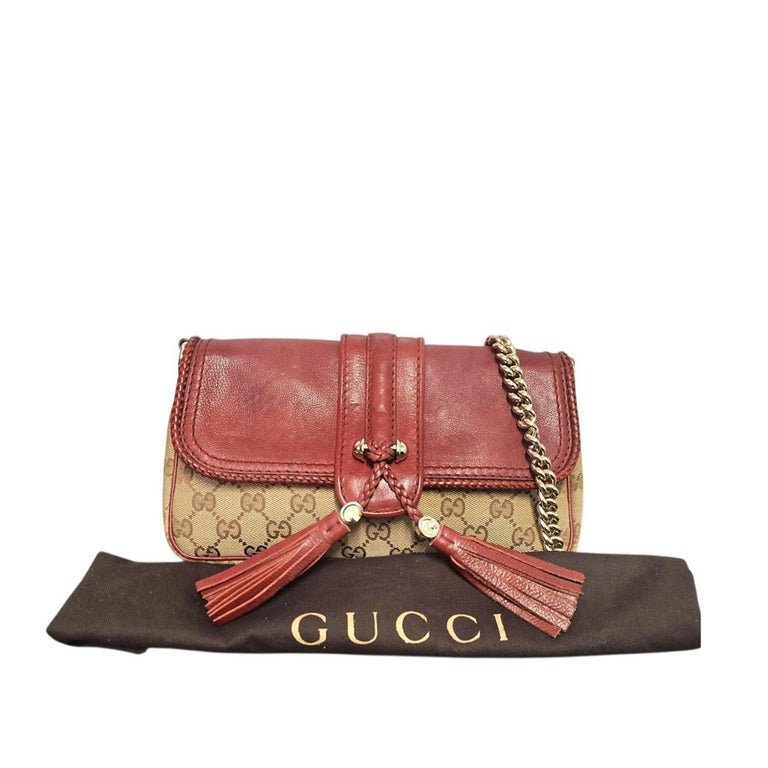
Yet even I, as a singularly signage-averse shopper, am not immune to monogram’s perennial appeal. It remains a fixture across most top-tier heritage houses (yes, even Hermès has dabbled in the lot), The RealReal reports of logo-laden wares retaining or even increasing in value by up to 119%, and Louis Vuitton’s monogram-trimmed plastic face-shield from Cruise 2021 ($961 at retail) sold out… near instantaneously.

In related news, it appears that COVID-19 is back.
So, what monogrammed miracle has prompted this change of heart in yours truly? Read on to find out!
Love Logos or Loathe Logos?
“Logos are the brands’ signatures. Why would I spend that much money on something that looks like any other bag?” notes Alejandra. “Logos make the wearer look like a walking billboard,” she adds.
And indeed, the monogram has long been a much-controversied point of contention within the fashion camp.
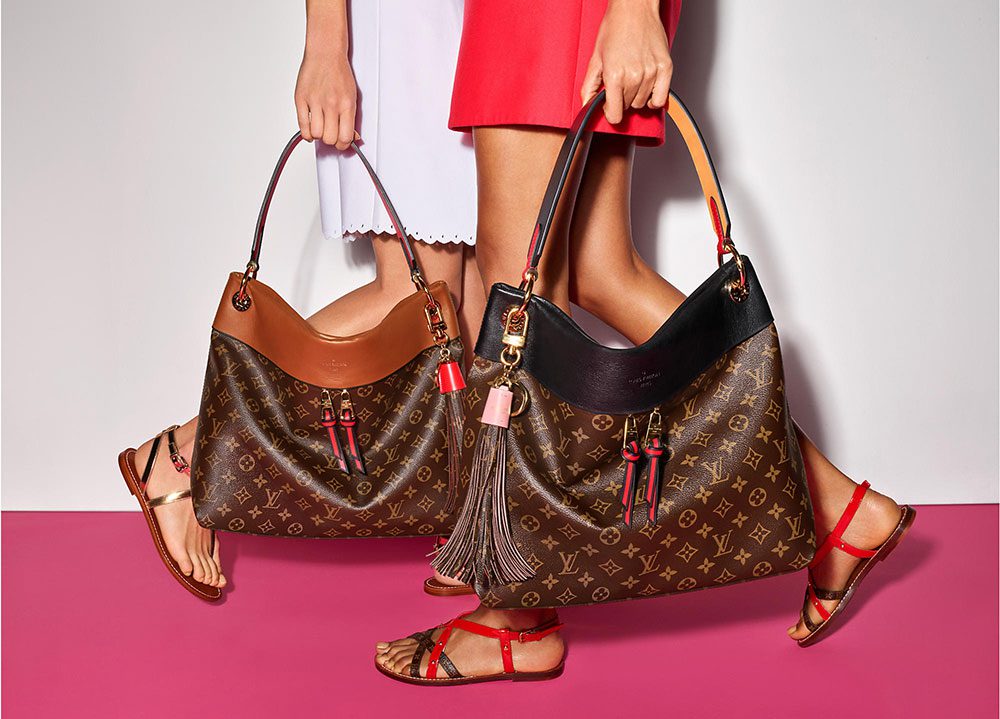
There are those of us who have drunk the Kool-Aid and surrendered to the logo-laden paraphernalia perpetually filling up our FYPs because they add some combination of coolness/youthfulness/sophistication/style to our otherwise uncool/un-youthful/un-sophisticated/unstylish selves. Or perhaps you simply wish to infuse some pizzazz into your outfit.
And of course, we aren’t judging. When something has so clearly succeeded in being associated with the moneyed over prolonged periods, it’s only natural that brands and brand-buyers alike would trust it.
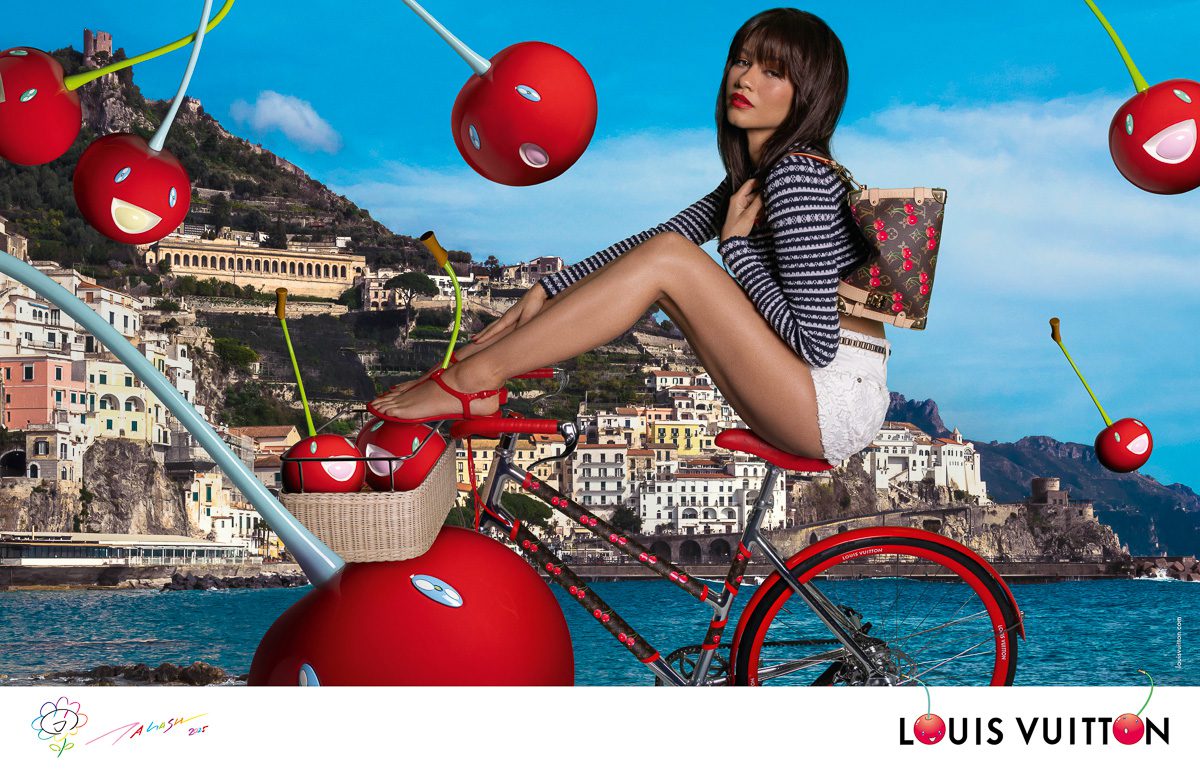
Others, however, are less excited about keeping up with the Joneses (or the Jenners). “Rocking a logo jawn,” writes Jonah Weiner and Erin Wylie of Blackbird Spyplane, “strikes me as the equivalent of telling a joke and then immediately — inelegantly and unconfidently — explaining why it’s funny, instead of trusting that the joke, and your delivery of it, will get laughs on its own terms.” “You’ve chosen to rock a thirst badge,” they add.
Suffice it to say, I’ve always found myself in the latter camp.
At Long Last, the Atlantis
However, something in Louis Vuitton’s storied canvas, steeped in its 171 years of trunkmaking history, caught the eyes of yours truly. Of course, the splashed-out Speedy is having a resurgence of its own, and those spacious Neverfulls are never likely to go out of style.
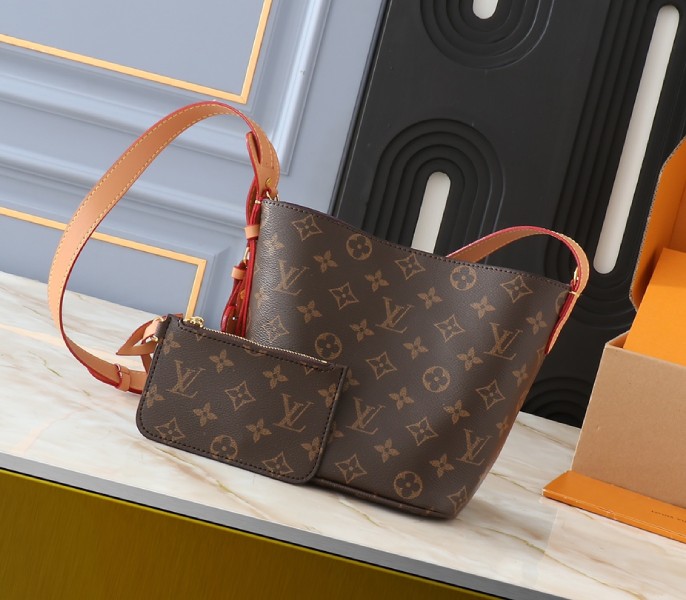
But what piqued my interest on one of my nightly scrolls across Vogue Runway was Vuitton’s (subversive?) take on the plastic bodega bag – the Atlantis tote. User Fun_Performance_1578 on Reddit puts it in context: “lol imagine going to the grocery store and the cashier asks paper or plastic and you whip out this bad boy. The LV grocery bag edition.”
First introduced in Vuitton’s Fall-Winter 2016 RTW lineup, and then relaunched as “the breakout star” of the Pre-Fall 2023 show in Seoul (with another reappearance for Cruise 2024), the Atlantis is rendered in supple logo canvas as the ultimate grab-and-go silhouette… that of an actual grocery bag.
And sure, the updated version has plenty of, erm, updates.
The original turn-lock closure secured with a padlock makes way for a magnetized mechanism adorned with a removable luggage tag and a vachetta handle-fastener (also removable). The shoulder strap attachment boasts a new (and somewhat novel) redesign. At the same time, the original PM and MM sizes were expanded to include BB and GM iterations, now available in a seasonal sandy-hued Dune Monogram and Reverse Monogram alongside the classic Monogram Canvas (not to mention, all-leather variants exist too).
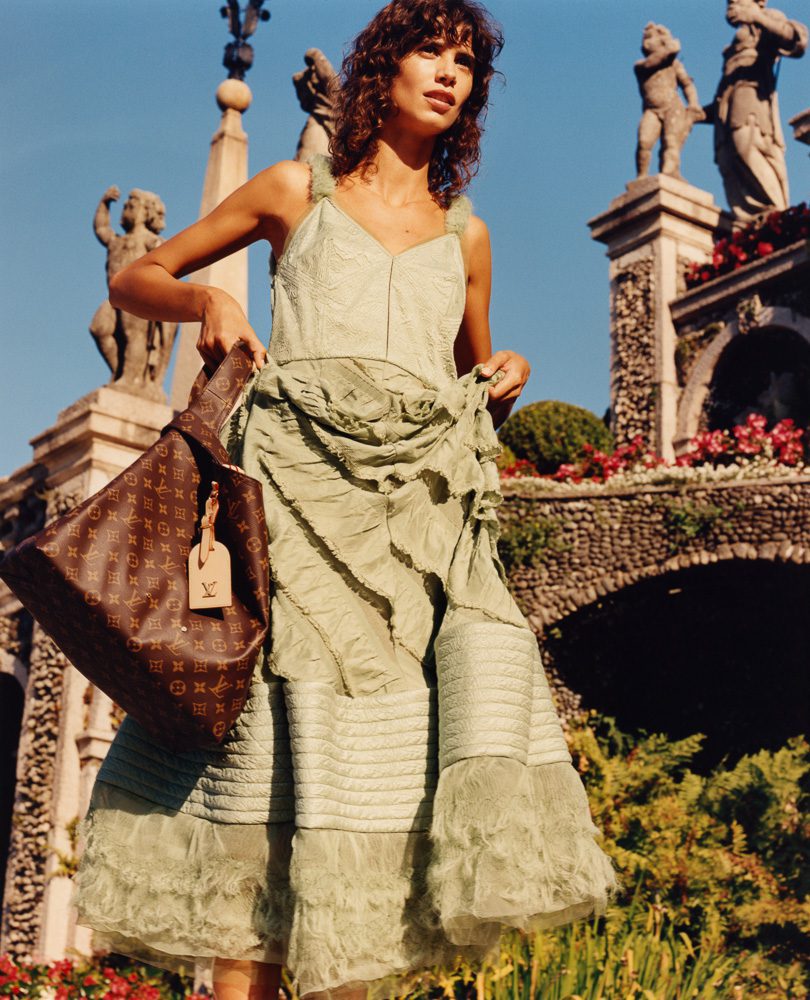
But at its core, the new Atlantis, like the old Atlantis, is a dual-handled, open-top errands bag made edgy by its price tag and presentation.
And therein lies its novelty.
The Secret Ingredient is Irony
Of course, leaning into either camp a little too much is possible. Laura Reilly of Magasin, a purse-averse person herself, is (unsurprisingly) a staunch skeptic of the logo: “Imo, you’re supposed to acquire things in secret like you ALWAYS had them.” When Reilly is shopping in the flesh,” writes Liana Satenstein, “she carries a larger regular handbag to stick in her purchases. ‘I’m very “oh I don’t need a bag” at the register.’” Satenstein adds, “A quiet luxury perspective of shopping bags… it exists!”
Even Blackbird Spyplane notes, “any gesture of aspiration contains within it a component of vulnerability, if not outright insecurity and vanity.” And with a flagrantly flexy monogrammed piece, “the aspiration ~ vulnerability ~ vanity is too naked, too bald,” they add.
Some brands, like Maria Grazia Chiuri’s Dior, choose to coincide the return of the Galliano-era J’Adore Dior tee for FW25 with a life-sized pterodactyl hovering over the runway (I’m not making this up) so as not to lean into the logomania too starkly. Some brand logos, like a New Yorker or Mubi tote (although these fall into merch territory), are even deemed “acceptable”.
But for Louis Vuitton, whose bread and butter is the logo (even more so now with all the recession talk), the Atlantis was a smart way to lean into its maximalist means of sustenance while still being tongue-in-cheek, like those $2,000 Balenciaga comforter totes (but perhaps in a less intentioned way). And it’s an interesting departure from the classics, if nothing else.
Is it any more luxurious or, at $3,150 for the GM in canvas, any less overpriced? Not really. Is it still endlessly usable and fun compared to your average “classic investment”? Absolutely!